Originally published on EmbeddedRelated.
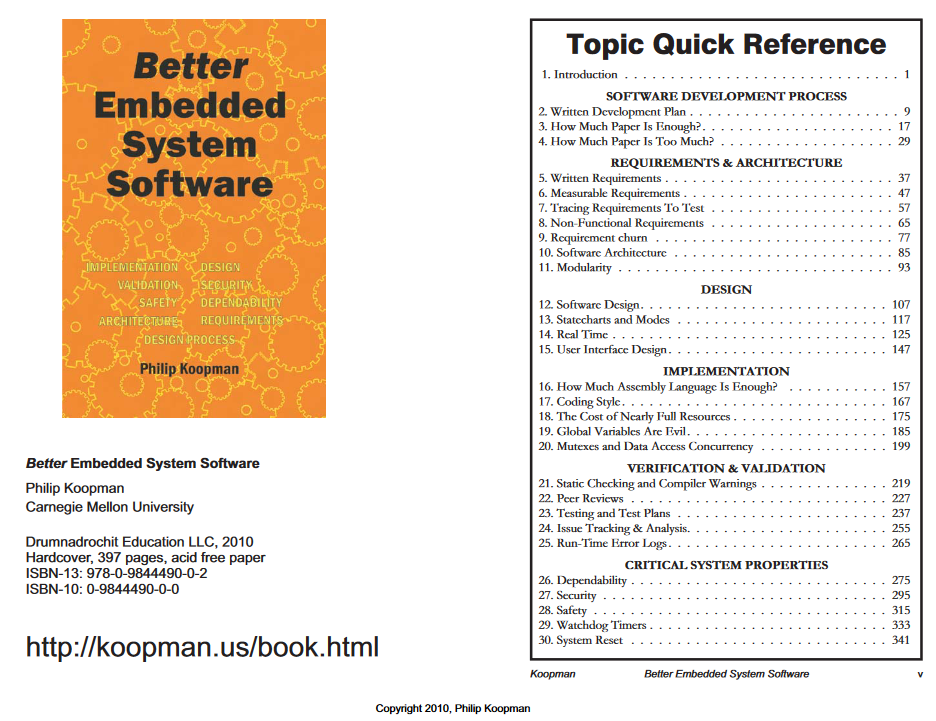
What skills should an embedded systems engineer actually have? The field is broad enough that even experienced practitioners have significant blind spots. This article surveys several published roadmaps — including the ACM’s 2016 Curriculum Guidelines for Computer Engineering and a curated set of book and course recommendations — as a way to take stock of where you are and identify what you don’t know you don’t know.
The ACM’s recommendations cover the expected core topics: microcontroller architecture, peripherals (GPIO, UART, SPI, I2C), multitasking basics, and networking. The article builds a broader skill inventory around those foundations, touching on systems programming, real-time systems, analog electronics, and the softer skills that often separate good engineers from great ones. Recommended books for each area range from Elecia White’s Making Embedded Systems to Michael Barr’s Programming Embedded Systems and others, each vetted by the author’s own experience teaching and consulting.
Whether you are a student who just finished a first Arduino project or a professional with decades of experience, periodically measuring yourself against a defined baseline is one of the most reliable ways to keep growing. The roadmaps here are deliberately opinion-driven — and I say so up front — which makes them more useful as a conversation starter than as a rigid prescription.